I guess I should update this thing every once in a while, eh?
Vlogging has taken up the better part of the day-to-day life these days. I do seem to be more focused on that than anything. However, with new tools that I have gotten lately, I have come to realize that I could be doing more with this particular blog.
Speaking of the vlog (which is called Nick and Greg, btw, please do go and look) I have new ideas constantly. It’s a blessing, but a hindrance sometimes. Like at this particular moment. It’s 8:10am on Sunday morning, March 11th. I should be in bed, but I am not. Daylight Saving Time started last night, so that’s one less hour of sleep right out of the box. Dammit.
When I decided to start the Nick and Greg channel on YouTube, I told myself that it wouldn’t consume all of my time. It hasn’t. But, on the other hand, this blog has suffered because of it. I haven’t done any Trek Reviews, haven’t even wrote a general thought down here. So, you could say that vlogging and dwarfed blogging on the totem pole of priorities in my life.
So, since I’m paying for this web space, I might as well at least try to blog again.
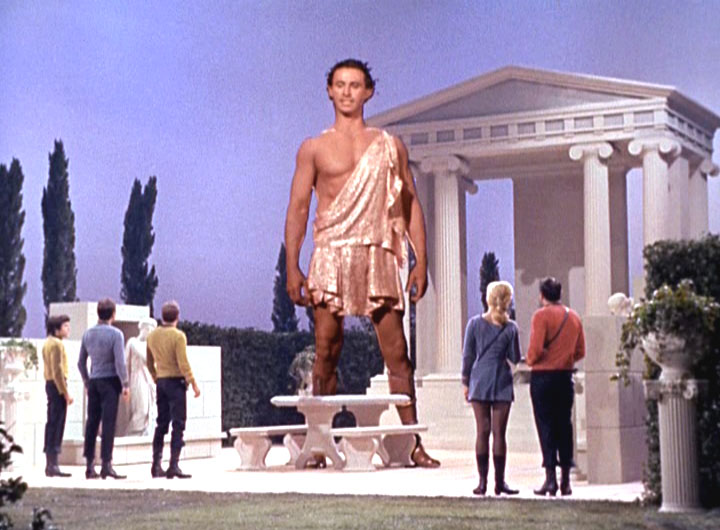
When the topic of Greek mythology came up in high school, I quickly realized that I had been exposed to the subject before. It was the Greek god Apollo, as depicted by the versatile actor Michael Forrest, in the episode “Who Mourns for Adonais?”
The story is an intriguing idea in its depiction of how Greek gods could just be beings on a higher level of existence instead of a true deity. My personal beliefs are that deities can be fallible, and Apollo certainly is that. His constant demands for praise certainly are shortsighted. A caring individual would certainly realize that the humanity of the 23rd century would have certainly outgrown the need for a being such as himself to give guidance and power.
That alone is not the true driving element of the story. What drives it is the love interest between Apollo and Lieutenant Carolyn Palamas, played by Leslie Parrish. She is an historian on the Enterprise, the A&A officer (as McCoy puts it at one point, meaning Archaeology and Anthropology.) She takes a liking to Apollo and is quite smitten with him. Kirk forces her to remember her duty of course and she has to poison that love for the betterment of the crew’s survival. It had to end that way and it is very tragic to watch Apollo be destroyed and fade into oblivion. Kirk is left to think if a little bit of worship would have been too much to ask.
On screen, that’s where the story ended. It has been well documented that there was a tag scene on the bridge where we learn that Carolyn was in fact impregnated by Apollo during their time together on Pollux IV. If you want to read the scene as it was written, go here to Orion Press and scroll down to the bottom of the page.
Of course NBC’s Broadcast Standards would never have allowed that to remain in a TV show in 1967. It was way too suggestive. However, it is still a very controversial and storied point in the story. It has great emotional impact and definitely could have set up a sequel episode dealing with that child and what would happen from that point forward. If only… if only…
Star Trek barely staved off cancellation, but got renewed. Most TV shows that get a reprieve and see a second season might get retooled and become worse off and then lose their popularity very quickly. In the case of Trek however, thank goodness, it did not.
The cast and crew deserved to have a few weeks off in between the two seasons, and they returned in May 1967 to being filming the second season. When it came time for all of their hard work over the summer to finally be seen on NBC, the powers that be had several excellent episodes to draw from, in my opinion.
Of all of the episodes, I think they picked the best one of the whole lot, “Amok Time,” to open the broadcast schedule on September 15th, 1967.
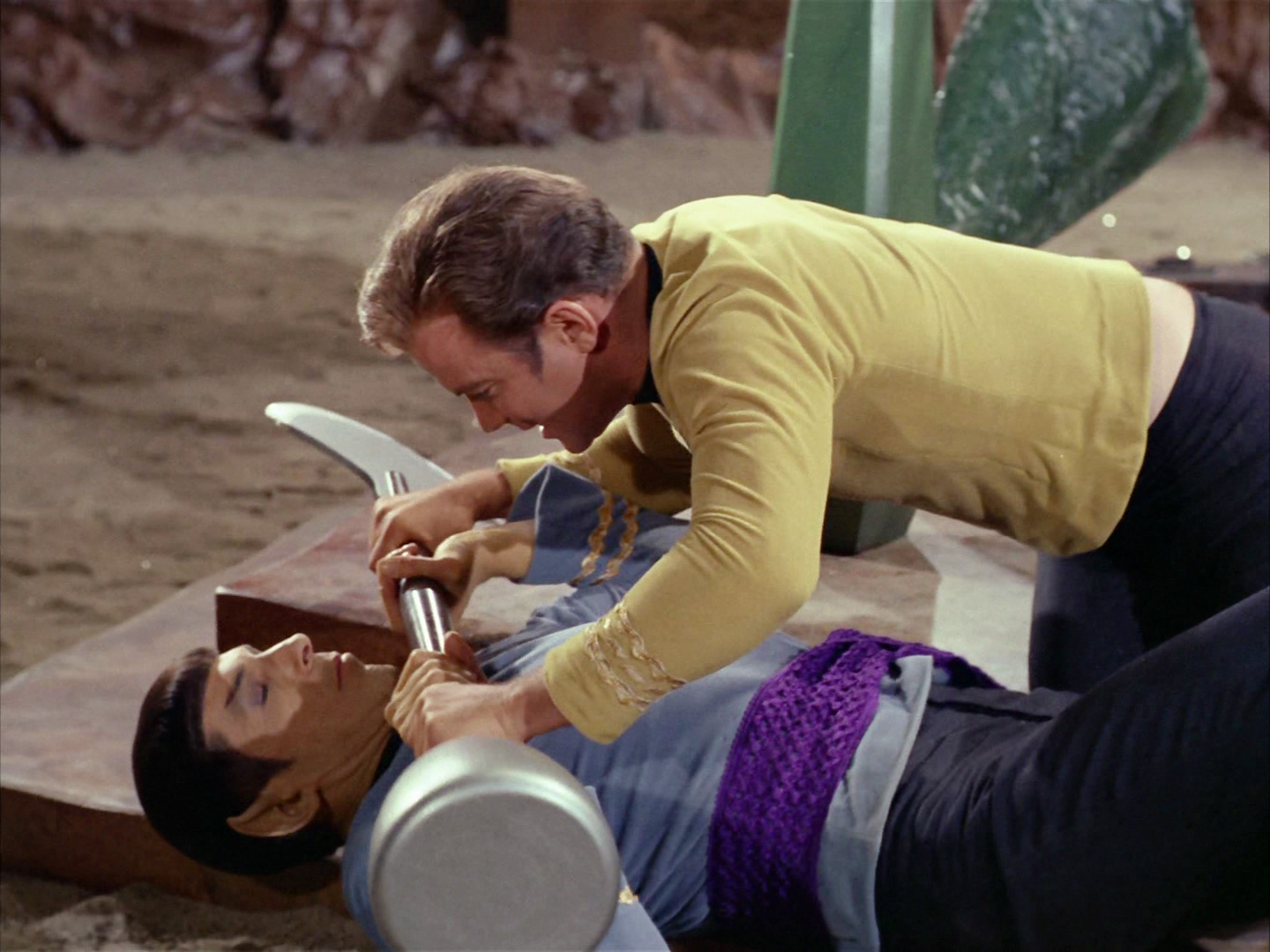
The story revolves around Spock, betrothed to a Vulcan woman named T’Pring at the age of seven, having to return to his home planet to answer his mating call, known as Pon Farr. He has to fight Captain Kirk to the death in a very memorable combat sequence, known not only for the visuals, but also for Gerald Fried’s awesome music.
This episode embodies just how wonderful the characterization and the concept of Star Trek is so unique in its own regard. I always put myself in Kirk’s place in this show, trying to think of “What would I have done?” In every instance, I wouldn’t change a decision he made. Spock is not only his First Officer, but his friend, and deserves more than to just be brushed off by the service because of some diplomatic mission. It’s not that easy for most people to put their career on the line for the sake of one individual, but Kirk doesn’t care. He shouldn’t care.
One plot element that makes a brief reappearance here is Nurse Chapel, played by Majel Barrett, and her affection for Spock. She tried to give him some Plomeek Soup (a Vulcan delicacy) at a couple of points. I am surprised they never explored that plot point more in future episodes, but then again, as NBC had a long standing disdain for Barrett in the first place, I can see why they didn’t.
The thing about this episode that immortalizes it for me, and for many others, is the aforementioned music score by Gerald Fried. How many TV scores that you know of are quoted in other movies? I am referring of course to the ubiquitous fight music from Act Four. It was quoted in the comedy movie “The Cable Guy” by Jim Carrey during a scene set in a medieval themed restaurant. The guitar-based theme for Spock just embodies the spookiness and logical aspects of his character so, so well. It fits like a glove. I couldn’t imagine this show without that score. Rip it away and you have only half of the story.
As I said before, this was the perfect show to open the season. This episode surely would make me and the rest of the audience feel for 100% certain that the letter writing campaign to save the show earlier in the year was worth every effort.
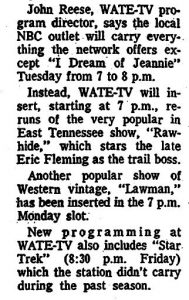
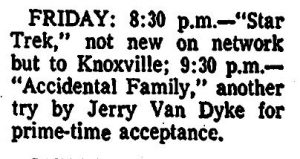
As I noted last year, Knoxville TV screens did not get to see the adventures of Captain Kirk, Mr. Spock and the USS Enterprise in its maiden voyages on the NBC Television Network. The program director at WATE (then the NBC affiliate) did not think Star Trek would do well on Knoxville TV screens. They opted instead to show reruns of Rawhide, a very popular western. Like a lot of things, times change, and in this case, one year might have made a difference.
It’s well documented that Star Trek barely staved off cancellation in the first place. NBC itself was inundated with letters begging for the show to be renewed. The network made it official on March 2nd, 1967 during the closing credits of “The Devil in the Dark” with a voiceover informing viewers that the show would continue to be seen on NBC, and to stop writing letters. Naturally, viewers wrote more letters thanking the network for renewing their favorite show.
I wonder if anyone wrote letters to WATE asking for the show. I think I can comfortably assume that there might have been some, but not enough to change anything. Certainly there were protests that WATE was not carrying The Monkees, since WATE started carrying that program in February 1967. That is an unsurprising turn of events in regards to that show, given the overall pop culture phenomenon that that group carried.
A surprising thing to point out is that the Rawhide reruns that were shown in place of Trek during 1966-67 were not shelved, but moved to Tuesday night, covering up another show, I Dream of Jeannie. This is interesting, given that the show was very popular with most audiences, it lasted until the conclusion of the 1969-70 season.
Unfortunately, the true answers are lost to time. Nobody thought to ask the local programming executive at any point in time what they thought about Star Trek and why they didn’t think it would work in this market at the time it debuted. One thing is for certain, however, when it debuted, TV in Knoxville would never be the same. I do have evidence to back this claim up, kids. But that story will be for another day. 🙂
We went to Ripley’s Aquarium of the Smokies with our nephew Jerrod and his girlfriend Tori. We all had a blast! Look back on the highlights with this edition of Nick and Greg:
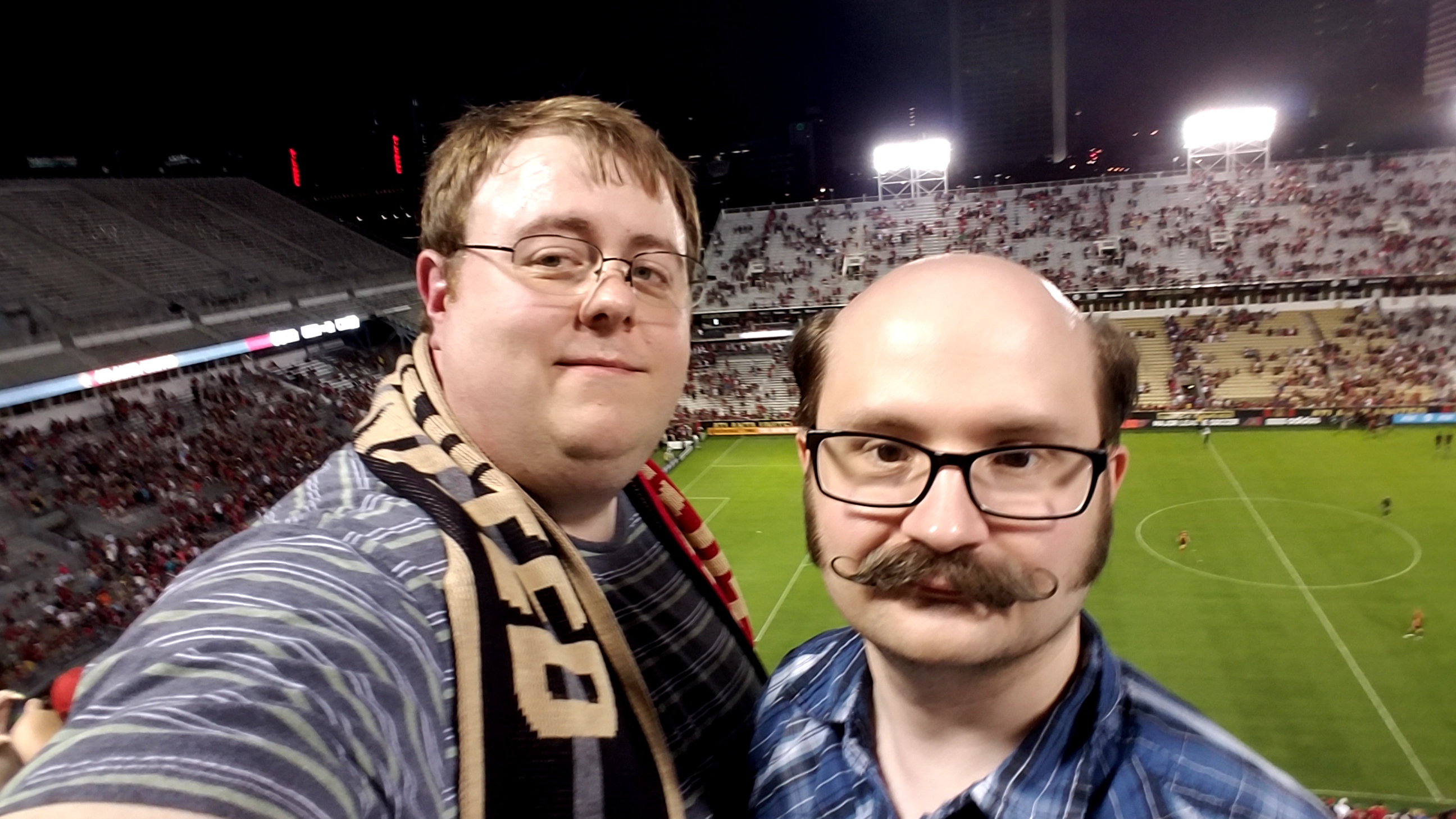
Call me crazy, but lately I have felt inspired. Inspired to do more, to be more inspirational. One way that I feel that we can do that is to share with the world how wonderful our lives are as a married couple.
To that effect, we have started a new YouTube channel!
But you may ask yourself, “Why are you doing this?” I say why not? Life is too short to not share the fun times you have. I have held myself back too much lately for my own good and I think it’s time to let it all hang out. We should all be proud of who we are and love doing it for every second!
Contains information related to marketing campaigns of the user. These are shared with Google AdWords / Google Ads when the Google Ads and Google Analytics accounts are linked together.
90 days
__utma
ID used to identify users and sessions
2 years after last activity
__utmt
Used to monitor number of Google Analytics server requests
10 minutes
__utmb
Used to distinguish new sessions and visits. This cookie is set when the GA.js javascript library is loaded and there is no existing __utmb cookie. The cookie is updated every time data is sent to the Google Analytics server.
30 minutes after last activity
__utmc
Used only with old Urchin versions of Google Analytics and not with GA.js. Was used to distinguish between new sessions and visits at the end of a session.
End of session (browser)
__utmz
Contains information about the traffic source or campaign that directed user to the website. The cookie is set when the GA.js javascript is loaded and updated when data is sent to the Google Anaytics server
6 months after last activity
__utmv
Contains custom information set by the web developer via the _setCustomVar method in Google Analytics. This cookie is updated every time new data is sent to the Google Analytics server.
2 years after last activity
__utmx
Used to determine whether a user is included in an A / B or Multivariate test.
18 months
_ga
ID used to identify users
2 years
_gali
Used by Google Analytics to determine which links on a page are being clicked
30 seconds
_ga_
ID used to identify users
2 years
_gid
ID used to identify users for 24 hours after last activity
24 hours
_gat
Used to monitor number of Google Analytics server requests when using Google Tag Manager
1 minute
You can find more information in our Cookie Policy and .